Showing posts with label nutrition. Show all posts

Thursday, May 12, 2016

Off to a Good Start!


I’ll admit, I wasn’t always a breakfast eater.  When I was growing up, I got on the bus just after 7 a.m. and had an hour on the bus before I got to school.  My stomach didn’t seem to wake until later in the morning.  On weekends, I remember enjoying breakfast more.  My mom made Cream of Wheat or Cream of the West, I'm not sure why, but we were never oatmeal eaters back then.  On a rare occasion, my dad made breakfast.  Though we didn’t camp often, it seemed he always took over breakfast at the campfire and the meals were delicious.  
Oatmeal breakfast to go in jar with one-piece lid and jar of milk!

As an adult, I started eating breakfast consistently when I was eating for two.  That first "baby" is now 15 years old! Once the breakfast-eating habit was formed, it stuck, but I wanted easy items that I could enjoy every day without much hassle.  I also became more interested in adding oats to help with cholesterol levels and to make sure I was getting the recommended fiber in my diet.  Below are some of my favorite, quick, easy, inexpensive, whole grain options. 

For the past year, I have alternated between some of my favorite oatmeal recipes.  I generally make the recipe on Sunday and then portion into containers for easy "grab and go" breakfasts.  I'm a big fan of canning jars with one-piece, reusable plastic lids for transporting breakfast.  These containers and recipes work well for freezing in individual portions, too.  I typically eat breakfast at work around 9 a.m.  If you don't need a transportable breakfast, many of these recipes are easy to make in a pan and store in the refrigerator with a lid to enjoy at home.  

Baked Berry and Peach Oatmeal

3 c. old rolled oats
½ c. brown sugar
2 tsp baking powder
½ tsp. salt
2 whole eggs
1 ¼ c. skim milk
¼ c. canola oil or applesauce
1 tsp. vanilla
1 can peaches chopped (I use kitchen shears to chop in the jar and use the juice and all)
1 c fresh or frozen berries (my personal favorite are huckleberries)
A few finely chopped nuts can also be added


Yum!  Peaches, huckleberries and oats!
In a large bowl, combine the oats, brown sugar, baking powder and salt.  Whisk eggs, milk, oil, vanilla, peaches and berries.  Bake in 9x13 cake pan lightly coated with spray.  Bake at 350 degrees F, for 35-40 minutes. This recipe has been a hit when I’ve made it for 4-H members.  A light sprinkle of cinnamon goes great with this oatmeal and milk. 

Steel Cut Oats

1 c. steel cut oats
3 c. hot water

In a bread pan, mix oats and water.  Put in a 350 degree oven for 45 minutes.  When done, stir and put ½ to 1 cup in pint-size canning jars with lids and refrigerate.  To serve, add chia seeds, raisins, dried cranberries, dried blueberries or chopped nuts.  To add extra fiber, dice a few apples and treat them with a fruit preserver (Fruit Fresh or lemon juice) to keep them from browning and put them in a container in the fridge.  Each morning, heat the oatmeal in the microwave for a few seconds, stir in a spoon of yogurt, add the diced apples and any other extras.  Eat from the jar.  Each morning, hot oatmeal, dairy, fruit and only one dish to clean!

Steel Cut Oats

3 ½ to 4 c. water
1 c. steel cut oats


Place in slow cooker on low for 8 hours.  Can serve them with milk and sprinkle with cinnamon and sugar. This same recipe can be made in the oven by placing items in a baking dish in a 325 degree oven for 45 minutes. Stir once about 30 minutes into cooking time


 Make Your Own Oatmeal Packets

4 c. Rolled Oats
Chia seeds
Sugar (brown or white)
Dried Fruit
Nuts

Quick cook oats can be used, but I had rolled oats on hand when I made these packets.  Put rolled oats in blender or food processor (I used about 4 cups).  Blend for a bit, until you get some fine powder and some regular oat shapes.  You could probably powderize about 1 c. of oats and then add 3 cups regular or quick cook oats to that powder.  The powder should make a creamier and faster cooking product.  If doing different flavors of packets, take about ½ c. of the oats and put in snack-size bags or containers.  I think I’m going to try half-pint jars with one piece lids next time I make these, so that I have my serving container for adding the water.  Add about 1 tsp of sugar, dried fruits, nuts, chia seeds, etc. per each “packet.” If doing all the same, mix “extra”  (fruit/seeds/nuts/sugar) ingredients into one large container with oats and then portion out 2/3 c. or so into snack-size bags.  I like dried blueberries, cranberries, chopped pecans, chia seeds and brown sugar in my oatmeal packets. You’ll have to experiment with the sugar for a bigger batch or just add it to each portion.  When ready to use, pour contents of packet into a bowl, add hot water and let sit until oatmeal is creamy.  Not only will making your own oatmeal packets save you sugar in your diet, they will also save you money.  Making your own is generally far less expensive. 


Baked Oatmeal

1 can pears pureed in blender
2 ½ cup milk
2 ½ cups sugar (brown or white, honey also works as substitute)
4 egg whites
7 ½ cups oatmeal
5 tsp. baking powder
2 ½ tsp. salt
Cinnamon

Mix together sugar, sugar and eggs.  Add oatmeal, baking powder, salt, milk and cinnamon.  Put in 9 x 13-inch pan that has been greased.  Bake at 350°F for 45 minutes.  Can be frozen in individual portions to be heated later.  This is a recipe I adapted.  I was looking to reduce the oil, since I eat oats to help my cholesterol levels.  A can of pears (canned in juice) happened to be sitting on my counter as I analyzed the recipe.  I decided to blend it and try it out.  It worked well.  I think other types of fruit could be blended and used as a substitute for the pears. I've had friends who have reported peaches and apricots also work well.  

Baked Oatmeal from Glenn Deuchler

6 cups old fashioned oatmeal
2/3 c. brown sugar
1/3 c. honey
¾ c. egg substitute or 4 whole eggs
2 tsp. cinnamon
¾ tsp. salt
3 tsp. baking powder
½ c. oil
½ c. apple sauce
1 c. raisins (optional)
2 c. bran cereal (optional)
1 ½ c milk (separate into 1 c. and ½ c.)

Stir all together.  Dry ingredients first, then liquid ingredients.  Use 1 c. of milk with all other liquid ingredients.  Mix all together well.  Add additional ½ c. of milk (approximately) to create a consistency like bread pudding.  Grease 9x9 pan.  Bake in oven at 375 degrees F for approximately 45 minutes, or until center is set (if toothpick comes out clean, it is set).  Enjoy!

Hit the Road Oatmeal

Last summer, I was trying to keep up with healthy whole grain breakfasts, but we leave super early on Saturday mornings for swim meets.  On a whim, I made oatmeal in a wide mouth thermos and packed along a container of fixings (brown sugar, chopped pecans, cranberries and a spoon).  I was surprised how well it worked.

½ c. rolled oats
1 c. hot (near boiling) water

Put oats and water in a thermos.  Wait a few minutes (or until you reach your destination).  Stir in extras and enjoy. 

Whole Wheat Cereal
1 c. cleaned raw wheat
2 c. water
½ tsp salt


Cook overnight in slow cooker on low.  Can triple. Remainder keeps in refrigerator. Reheat portions needed for cereal or use as ingredients in soups or salads. Can replace dry beans as in chili or rice in many dishes.


Cooked Wheat Berries
1 c. raw whole kernel wheat berries
5 c. water
½ tsp. salt


Rub slow cooker wall with 1 Tbsp. butter. Cover the ingredients and cook on low 8-9 hours. Cook until tender. Drain and cool. Cover; store in refrigerator or freeze to use in recipes, thaw first.


There are so many ways to get off to a good start nutritionally in the mornings!  I hope you enjoy these recipes and ideas and use the comment space to share some of your own.  

Thursday, December 31, 2015

Invite Yourself to Eat Healthy Foods

In anticipation of holiday treat platters inviting me to sample sugary treats all week, I decided to build a small perimeter of defense.  I spent a bit of time last Sunday evening chopping vegetables, lettuce, spinach and kale to assemble some stacked salad combos to have ready for lunches all week.  The hard-cooked eggs, garbanzo and black beans were ready to add protein to the salads to sustain us through the day.  It had been more than year since I spent a Sunday evening chopping and preparing salads for lunches.  I think at one point, I had a salad for lunch most every work day for six months.  Isn’t it strange how a disruption can throw you off of a good habit?  A year or so ago, I was preparing the salads in wide-mouth quart jars.  They looked so pretty lined up in my refrigerator.  Last week, I put the salads in glass bowls instead.  Since I layer the salads, they are not as easy to eat from a jar.  The salad fixings mix better while I’m eating them from a bowl.  I suppose I could use plastic storage containers, but somehow the opaque plastic hides all the inviting colors of the tomatoes, carrots, broccoli and beans.  It seems if the food is prepared, easily accessible and visible, it gets eaten.  I suppose knowing that simple fact is half the battle in daily health habits.

It is surprising how we unwittingly invite ourselves to make food choices.  It is no surprise that the plate of chocolate fudge, peanut butter balls, caramels and cookies that is on a glass platter sitting on the counter invites us to nibble and nosh, even when we didn’t mean to do so.  I may have just gone to the kitchen for a glass of water, but if that goodies selection is sitting there staring at me, it is unlikely that I will leave the kitchen with just my glass of water.  The good news is that we can learn to make healthier foods just as inviting.  Have you ever done a household food andnutrition assessment? 

Instead of coming home from the market and putting the produce in the vegetable drawer, prepare it in ready-to-eat packaging.  A bag of carrots can sit in the back of the vegetable drawer for a long time without anyone being “invited” to eat them, but, get them out and peel them, chop them and put them in a glass container in the front of the refrigerator and they’ll invite every person who opens the refrigerator to consider the carrots as their next snack.   There are many consumer and food psychology principles we can put to work for us.  One of my favorite consumer psychologists is Dr. Brian Wansink.  A quick web sear


ch will reveal many videos as well as a list of books he has authored.  Dr. Wansink is famous for the discreet food invitation.  From school cafeterias to business lunches, he purposefully revamps food service opportunities as part of his research.  He has spent considerable time discovering the subtle changes in where foods are placed, how they are served, what containers we use and how it all comes together to suggest and influence our choices – healthy or unhealthy.  In one school cafeteria makeover, placing fruit at the front of the line in an attractive bowl dramatically increased fruit consumption.
 

Store nutritious foods where they are easier to access than less nutritious foods.  It is easier to keep on a healthy track if the healthy choice is the easy choice.  I invite you to think about your own food and nutrition environment and how you can invite yourself to make healthy choices.  

Tuesday, December 1, 2015

Dine In

For Thanksgiving, our family had planned to host, but when the guests we invited couldn’t make it, I “invited” myself to Mom’s for Thanksgiving.  She was already planning to host my sister and her in-laws. Mom laughed when I invited myself to Thanksgiving.  Apparently, my sister had “invited” Mom to host! 
Thanksgiving at the "cool kids" table.  We nearly ran out of black olives!

Holidays aside, I’ve been thinking about invitations lately.  Not the major invitations, like weddings and parties, but the daily, routine invitations.  December 3 is national “Dine In” day.  The goal is to invite people to remember family meal time.

Growing up, my mom was a master of the invitation to the family meal.  I took this routine for granted.  The majority of our meals were eaten around a table that either had placemats or a tablecloth and the places that were set properly with cutlery and glasses.  Food was passed around the table in serving bowls.  There was plenty of meal time conversation, as in addition to our immediate family, we generally had a few hired hands and an extra neighbor or relative at the table with us. 
Unfortunately, my own family routine is generally a far cry from my childhood mealtime memories.  Depending on our work and my daughters’ activities, we may eat in shifts at the counter, serving from pots on the stove.  What we really like, though, is when we are all together, often enjoying the company of a guest or two, eating at the table and enjoying mealtime conversations. 

Eating together may look different in different households, but “Dine In” day on December 3 is an invitation to consider your family goals and how planning a mealtime together can help families feel closer and provide better nutrition.  Family mealtime can happen with any meal – breakfast, lunch, dinner or even a snack.  It can include a tablecloth and full place settings or paper plates. I know a dad who makes a lunch-time date weekly with his school-age children.  I know families who eat breakfast together daily as it is the one guaranteed time they can all be together.  Dr. Sandy Bailey, MSU Extension Family and Human Development Specialist says, “Research shows that eating a family meal together helps family members make better choices in what they eat. Children learn a broader vocabulary as they listen and talk with other family members. They also learn social skills that they can use in other settings. Family mealtime also sends the message to family members that family time is important!”
Gathering around the table with family and friends.
This photo is at my Grandma's table, probably before I was born.
My sister's family now gathers around the same table.   

I invite you to make the commitment to Dine In with your family, friends or guests on December 3.  Our Thanksgiving meal certainly did not lack in good conversation, aided in part, by the arrival of a cherished cousin. It was a great day with conversation of shared memories, exciting excursions, and life lessons learned.  I’m glad I invited myself to be part of it!


Resources that may be of interest to you below:
Disclaimer:  No endorsement of these products is intended nor implied.

Conversation Starters:

Conversations to Go:  I'm not sure if it was Santa or the Easter Bunny who first brought these to our house.  They have been well-loved.  A quick search revealed that there is a "money" set and "travel" set.  

Dinner Time Games:  Another gift brought to our family that has been well-enjoyed.  Not so much conversation, but fun mealtime activities, nonetheless.

A search of a major online retailer revealed several options of table topics, chat packs, and
conversation starters.  There are some designed for couples.


If you want a list of conversation starters I've been gathering over the years, email me.  


Tuesday, May 20, 2014

Hummus Among Us

Chickpeas pods from Teton County farm.
Many years ago, 18 to be exact, when I was a young Extension professional, I remember that a recipe came across my desk in a nutrition publication.  I took the recipe home and tried it out.  The recipe called for using a can of garbanzo beans, or chickpeas, pureeing them with a variety of other vegetables, liquids and seasonings.  The product was touted as a sandwich spread. It was delicious and filling, but low calorie.  I now recognize the recipe as a type of hummus. 

Chickpea pods and a single chickpea.
Hummus has been a staple food in many parts of the world for centuries.  However, hummus did not work its way into American culture until relatively recent history, and took a little longer to make it to the rural reaches.  Chickpeas, the base of hummus, have been used in salads and soups commonly in the U.S for quite a while.  Chickpeas are rich in protein and fiber.  They are considered a pulse crop and can be a rotational crop that fits well into wheat and barley farming operations, increasing soil fertility.  According to the Montguide, Growing Chickpea in the Northern Great Plains, a rotation of chickpeas may also disrupt cereal crop pest cycles.  While I don’t claim to have my finger on the ‘pulse’ of farming in the area, I do know some area farmers who are planting chickpeas.  Fortunately, a few have shared part of their crop with me and I’ve been experimenting with chickpea recipes in my kitchen.

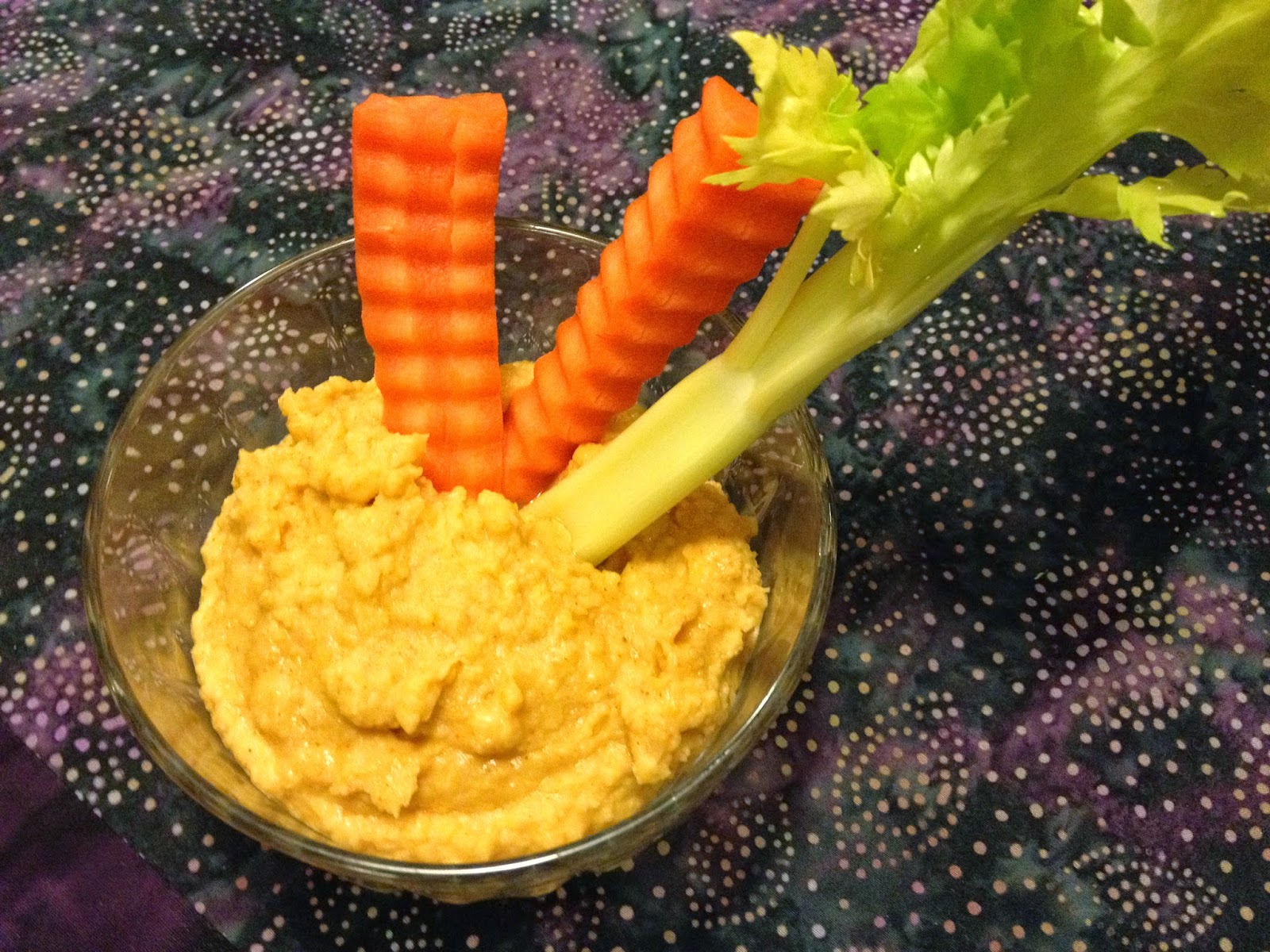
Homemade hummus, served with carrots and celery.
Speaking of experimenting, last fall, the Choteau culinary class, under the direction of Tami Krone, experimented with creating their own hummus recipes.  Several hummus recipes were created and taste-testing followed.  The winning recipe then became part of a limited market-research experiment I conducted with the Choteau senior class.  I prepared five healthy food items for the senior class to taste-test and they ranked items by their probability of purchasing the items at a sports concession stand.  Sadly, the hummus recipe did not make it into the running as a likely purchase at concessions.  Nonetheless, several of the students did like the taste of the product.  The culinary arts hummus recipes are posted below, in case you’d like to do a taste-test yourself.

Chickpeas from planting to 4-H presentation!
This spring, one of our 4-H members gave a great demonstration on hummus, as her family had decided to “give peas a chance” as one of their crops last year.  The 4-Her was able to be involved from production to presentation!  She also created her own recipe, available at our blog, and started with dried chickpeas.  She cautions that a dried chickpea, when soaked overnight, will double in size, so be conscientious of the size of container used for soaking.  There should be plenty of room.  My family experimented with soaking dried garbanzo beans as well and enjoyed watching them expand.  Even after soaking, the dried chickpeas are not soft enough and will need to be rinsed and then boiled for a few hours to become soft.  Once softened, the chickpeas can be blended with any number of other ingredients including tahini, lemon or lime juice, vinegar, garlic, cumin, curry, carrots, etc.  Often hummus is served with flat bread, chips, or pretzels, but it is also tasty when served with carrot sticks, celery or jicama.  It can also be served in a tortilla with salsa and greens, or as a sandwich spread on whole wheat bread. 


For those who do not want to make their own hummus, it is now available in many of our local grocery stores, as it is becoming more and more common in the Montana culinary experience.  For those who crave an individually crafted recipe, see our blog for recipes, photos and more information about the hummus among us!


Other resources for your use and enjoyment:

 Munch Code
Growing Chickpeas in the Northern Great Plains
Healthy Concessions
Healthy Concessions in Teton County
Munch Code -- Guide for Concessions -- Teton County


Recipes:


And the winner is ...

Tangy Southwest Hummus


1 can garbanzo beans (chickpeas), drained and rinsed
3 Tbsp. olive oil
2 Tbsp. tahini
3 1/2 tsp. lemon juice
1/2 tsp. paprika
1/2 tsp. garlic salt
1/2 tsp. onion powder
1/2 tsp. curry powder
1/2 tsp. cayenne pepper
1/2 tsp. salt

In blender or food processor, blend ingredients to desired consistency.


Hannah's Hummus


Water
1 c. dried garbanzo beans/chickpeas
1/2 tsp. salt
1/2 c. olive oil
2 cloves garlic, minced
2 tsp. garlic powder

Soak dried garbanzo beans in water in a large bowl overnight. Drain and rinse.  Add water and beans to a sauce pan and boil or simmer for a few hours until chickpeas are soft.  Cool slightly.  Add softened,cooled chickpeas to blender or food processor.  Add olive oil and blend.  If more olive oil is needed to blend, add more.  Add garlic, garlic powder and salt.  Blend until desired consistency.  Be sure to serve with breath mints!  It packs a garlic punch.

Classic Hummus


2 15 oz. cans chickpeas
1/3 c. tahini paste
8 roasted garlic cloves
1/8 c. lemon juice
1/2 Tbsp. extra virgin olive oil
1/4 tsp. cumin
Add garlic salt, white pepper and onion salt to taste

Drain liquid from both cans of chickpeas and reserve.  Use later if needed to reduce thickness in blended product.  Blend chickpeas and all other ingredients in a blender or food processor, pulsing for 60 seconds at a time.  Process until desired consistency is reached.  Transfer to serving bowl or platter.  Garnish and serve with a drizzle of olive oil and paprika.


Other tips:

Hummus will taste better if allowed to sit in refrigerator for an hour or two before serving.  Consider adding sun-dried tomatoes, roasted peppers and other flavorful ingredients.  Serve with pitas or fresh vegetables for dipping.

Wednesday, April 9, 2014

On the Cutting Edge ...

On the Cutting Edge, a knife skills class, taught by Travis Standley and Jane Wolery, MSU Teton County Extension Agents, teaches participants the basics of knife selection and care, as well as efficient cutting skills for fresh produce. The knife skills class is planned for April 17 from 5:30-8:30 p.m. at the Choteau Baptist Church.  The fee for the class is $5 per person and registration is required.  Class will be limited to 20 participants.  However, Standley and Wolery plan to offer more classes, so if you cannot attend the class on April 17, but are interested in taking the class, please contact the Extension Office to be placed on a waiting list.


During the three hour class, participants will learn about economical knife choices, cutting board care, knife care, sharpening and food safety.  Participants will also practice a variety of cutting techniques that should increase efficiency in food preparation, encourage production of homemade meals, and increase the use of fruits and vegetables. Students will practice the claw hold and tunnel hold.  Participants will learn several cuts to make food more appealing:  dice, cube, mince, julienne, rondelle, concasse and chiffonade.  Participants will learn how food choices relate to overall nutrition and disease prevention.  Skills learned in this class will be used daily in the kitchen when preparing food, and will be valuable for those prepping food for preservation.  The class is taught in such a way as to make the experience fun and rewarding for students!  Contact the MSU Teton County Extension Office to register for the class. 

Resources:
The resources are provided for enrichment, but are not intended to endorse an idea, product, company, etc.


Tuesday, March 18, 2014

Adding Healthy Choices

I’m better at addition than subtraction.  Subtraction is just harder.  I suppose that is why elementary teachers start with addition when teaching math concepts.  I find the same thing is true when it comes to nutrition. Subtraction is harder.  I often think, when it comes to our diet, we are thinking from a point of subtraction, or restriction.  During National Nutrition Month, I challenge you to think of nutrition in easier terms.  Put a little addition in your nutrition equation.

This month could you add one more fruit or vegetable to your daily routine?  Maybe you’ll add sliced apples as a mid-morning snack.  Maybe you could do a strawberry smoothie after work.  Maybe you like addition so much that you want to find out a way to add a new fruit or vegetable, one that you’ve never tasted befo
re, to a meal each week this month. 

I always like the phrase, “eat the rainbow,” because it helps me thinking about adding colorful produce to my daily meal plan.  The different colors are famous for providing different nutrients and phytochemicals, so adding a little color seems not only a good way to make a plate more appealing, but also equals a great way to boost nutrition. 

There are plenty of ways to add something a bit healthier to your routine.  Have you been getting enough whole grains in your diet?  If not, what about making a low-fat granola?  There are some great breakfasts featuring oats, steel cut oats or even wheat berries. 

If you are providing food for others, there is always sneaky nutrition.  You can add chopped spinach to other salad greens or to sauces like spaghetti, or even to salsas to give a boost of nutrition.  You can add a sprinkle of wheat germ or bran to breads and muffins.  You can also blend cauliflower in with mashed potatoes if you are looking for a way to hide it from you family. 

So often with nutrition, the focus is subtraction.  Reduce your sodium intake.  Cut back on fats.  Remove the refined sugars.  Subtraction is often much harder to do, because you feel limits being imposed.  However, I suspect if we all concentrated on addition, we would find that by adding another fruit, we would eliminate a different snack – maybe even one packed with solid fats, added sugars and salts.  We might not even notice.  It seems that adding something nutritious takes a fraction of the effort that eliminated something unhealthy takes. 

No matter the nutrition variable you choose to change, I hope it adds years of vitality to your healthy future. 


Steel Cut Oats Baked in Oven

1 c. steel cut oats
3 c. hot water

Place both ingredients in a baking pan.  I use a bread loaf pan, for no reason other than it is a good size.  Put in an oven that is 350 degrees.  Bake for about 45 minutes. 


Steel Cut Oats in Slow Cooker

8 ½ c. of water
2 c. steel cut oats
1 ¾ c. milk
¼ c. packed brown sugar
1 tsp. vanilla or almond extract
1 tsp. cinnamon

Grease the inside of a slow cooker with butter or spray.  Add all ingredients but the extract.  Cover and cook on low until the oats are creamy – about 7 hours.  Add extract and serve.


Steel Cut Oats Toppers
Consider adding any combination of the following to the steel cut oats:

Yogurt, flavored or plain
Greek yogurt
Dried fruit – raisins, cranberries, etc.
Fresh cut fruit – apples, strawberries, peaches
Nuts – chopped walnuts, almonds or pecans
Flax seed
Chia seeds
Honey
Nutmeg

Let me know if you have your own favorite combination!


Mashed Potatoes with Cauliflower Surprise

Potatoes
Cauliflower
Butter
Milk

Boil about an equal amount of cut cauliflower and potatoes together in the same pot.  When vegetables are tender, drain off the water.  Add enough milk to assist in whipping the vegetables to mashed potato consistency.  Butter can be added to taste, but go lightly.  Just a tablespoon or two will probably work, depending on how many vegetables you boiled. 

You can add spices and seasonings to taste – cayenne, cumin, chives, oregano, basil, pepper and garlic come to mind. 


Experiment and make it your own!

Tuesday, March 11, 2014

The Easy Choice ...

I’m currently teaching a class called Small Steps to Health and Wealth.  There are many health and wealth connections, but one I recently noted is that America Saves Week ends and National Nutrition Month begins.  Which makes a nice segue way for me, because this morning I was thinking about nutrition.  Not because I have it all figured out, mind you, but, I do try, to make reasonably healthy food choices, until a piece of chocolate gets in the way.

Really, that’s the problem, isn’t it?  What gets in the way of making good choices?  When a plate of brownies is sitting on the counter, it is hard to think about eating anything else, much less the cauliflower that is still wrapped and in the fridge.  The book, The Tipping Point, talks about the “stickiness factor.” The basic premise is about what makes a change or behavior stick.  Since January, I’ve made a concentrated effort to make the good choices stick.  For instance, once a week, I’m peeling a bag of carrots and cutting them with a crinkle cutter and putting them in a clear container in the front of the refrigerator.  Guess what?  We are eating more carrots.  I’ve also been making a batch of steel cut oats on Sunday evenings and portioning them out for weekday breakfasts, along with diced apples.  Having the food already prepared makes the healthy choices easier.

After my sugar spiral during the holiday season, I made a goal to eat more vegetables this year.  A friend sentme a link to a website with “Salad in a Jar” ideas.  It seemed to fit my style, so I’ve been preparing salads on Sunday evenings, too.  I put a bit of dressing in the bottom of a wide-mouth quart jar.  The next layer has to
be something that is pretty sturdy and won’t wilt while sitting in the dressing.  I’ve found that broccoli slaw (which can be bought prepped and bagged at the grocery store) and cherry tomatoes hold up nicely for this first layer in the dressing.  I’ve added a variety of other items to my salads, from corn, black beans and dice jalapenos with a homemade chipotle dressing to sunflower seeds, dried cranberries and crumbled bacon with a creamy parmesan dressing.  I top the jars off with cut lettuce that has been rinsed and spun.  Since the salads are made in a quart jar, I know I’m getting close to four cups of vegetables daily.  I make five salads on Sunday and the one on Friday still has crisp lettuce.  I’ve also tried a quinoa salad, which I portion into a pint jar that provides whole grain goodness and protein.  Besides the fact that lunch is already made, it is extremely efficient.  I think the fact that all the products are in clear containers makes them a colorful and attractive option.
 
How attractive and ready to eat our food is really makes a difference.  When teaching nutrition, I often talk about making the healthy choice the easy choice. You might look at the places in your home where food is stored and see which foods are most accessible and noticeable.  Open cupboards, refrigerators, freezers and see what you find.  Are the nutrient rich foods in the front, at eye level, in clear containers and easy to choose?  Are the chips in a brown paper bag on a high shelf and in the back?  If not, can you rearrange your food environment?   

In order to make the healthy choice visible at home, I have even changed to clear glass fruit bowls and I moved them to a location that makes them easy to grab.  I’ve also been working on serving colorful fruits and vegetables in glass containers at meetings.  At one recent meeting, I served mandarins, bananas and apples.  It took considerably less time than making cookies!  At another meeting, I served carrots, celery sticks and apple slices.  I did have a little dip for the apples, because I am reasonable (no matter what my family says). 

I’ve been able to keep up with the plan to make the healthy choice the easy choice for a few months.  I challenge you, during National Nutrition Month, to pick one new healthy habit to develop.  It doesn’t matter if the chocolate attacks you occasionally, leaping into your mouth and melting there.  What matters is the success you have today toward a healthy goal.  One of the inspiring quotes from the Small Steps to Health and Wealth class was from Oliver Wendell Holmes, Jr. who said, “The greatest thing in the world is not so much where we are, but in which direction we are moving.”  


Resources:
The resources below are for your consideration.  No endorsement of products, ideas, etc. is intended by including links.