Tuesday, January 27, 2015

Eleven Months Left for New Year's Resolution!

During January, I’ve covered the topics of identity theft, security freeze, credit reports and credit scores.  You may have set your own New Year’s resolutions, but I’ll bet you have figured out that I think taking care of your personal identity and credit record should be one of them.  I encourage you to set aside some time this week, even just 30 minutes to assess your personal situation.  The following week, set aside 30 more minutes to address any issues that were revealed in your assessment.  By setting an appointment with yourself, you are much more likely to get the business handled.  Also, according to some time management classes I’ve taken lately, setting a timer can eliminate the drudgery of a task.  The suggestion from the class was to set a timer for 25 minutes and then take a 5 minute break.  For me, it always seems like I spend more time dreading a task than actually doing it.  The same may be true for you. 

While you are assessing your credit and data security information, you may want to take an identity theft risk assessment test . The risk assessment is broken into sections: checking for evidence of identity theft, destroying sensitive personal information, and limiting access to sensitive personal information.  There are great questions that point you to important behaviors, like checking your credit card statements against your receipts, so that you are able to tell if there are unauthorized charges.  When I looked at the risk assessment web
site, it reminded me that I had a charge on my credit card that I wanted to investigate.  It is surprising how many good practices you can learn from a simple quiz. 

The section on limiting access to sensitive personal information is especially important.  Be sure not to give out your personal information on an unsolicited phone call or allow someone to access your computer remotely.  There are plenty of frauds out there.  If it seems suspicious, it probably is.  If a caller presses you for information, hang up.  If it is a legitimate call, they will follow up using other methods.  You may also want to opt out of prescreened credit offers, phone calls and junk mail.  You can do so by going to the opt-out portion of the Federal Trade Commission’s website.

Another place to be cautious is at the check-out stand.  Do not leave your credit card sitting out where others could see the numbers.  With today’s pervasive technology, someone near you in line could take a photo of your card without your knowing.  I try to keep my card covered while in the cashier’s line right up until the card is swiped. 

If improving your personal information security is one of your goals this year, I encourage you to set aside 30 minutes this week toward that endeavor. 

Opt Out of Unsolicited Mail, Calls, Email

Friday, January 23, 2015

Become High Scorer!

Last year, I was converting old VHS tapes to DVD.  One of the tapes was of my husband playing high school basketball.  It was a game where he was a scoring machine.  I didn’t know him in high school, so it was fun to watch.  While I was concentrating on the game, he walked in and said, “I made 30 points that night, and that was before the three-point line.”  Many people (who are old enough to know) would agree that the three-point line changed the game.  With sports, knowing how many points you earn and under what conditions is important.  The same is true with your credit score.

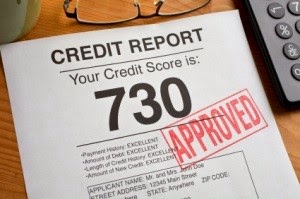
Credit scores are usually expressed in numbers ranging from 300-850.  These scores are what lenders use to determine how big of a risk you are.  But it is no longer just lenders who use the scores.  Some insurance companies, phone companies and employers also use the scores to determine their risk in doing business with you.   Do you know your credit score?  Do you know how it is tallied?  Did you know the credit game had a score board?

Much of your credit score is determined on your past behaviors and experiences.  Your score is based on information in your credit report.  In the starting lineup are your current balances and limits (or a ratio of the two), how many accounts you have, and your payment behavior (whether you pay your bills on time or not).  There are a variety of factors that may be considered and many versions of a credit-scoring models.  The scoring systems are supposed to help predict who is most likely to repay a debt.  You can get a credit report free at annualcreditreport.com, but getting your credit score involve additional fees. Some credit card companies are now including a credit score with their billing. 

You should know your credit score and which direction it is trending over time.  Many people get confused between a credit report and a credit score.  If you were playing basketball, for instance, the credit report would be how you played the game – assists, steals, rebounds, hustle and so forth.  Your score, or how many points you had, should reflect how well you played versus your opponents.  Credit scores give a numeric assignment to how well you are doing on the financial court compared to others.

Your 3-digit credit score can drop if you make a credit payment up to thirty days late.  A substantial drop in a credit score could affect interest rates offered to you from mortgages to credit cards. A different interest rate on a mortgage can add up to thousands of dollars over the course of the loan.  Late payments are just one of the many factors.  Your score can be affected by current transactions on a credit card.  A lender recently explained why my husband’s credit score was higher than mine.  At the point in time when my credit was reviewed, I had higher balances on my credit cards.  The company scoring me could only see the current charges, but not the fact that all balances were paid in full each month.  Of course, my husband was pleased with outscoring me. 

If you are trying to improve your credit score, you might look at some game-change strategies.  Pay your bills on time.  Timeliness and consistency account from more than 30 percent of your score.  Be careful how many times you apply for credit, especially the plastic kind.  Multiple inquiries to your credit report, such as those made by credit card companies or other lenders, can lower your score.  However, you definitely should check your own credit report, because there is no penalty on the score for self-inquiry.  If there are errors, you need to cry foul and get them fixed. 

If you have credit cards, you might think twice before applying for more, or before cancelling any of them.  Applying for new credit cards lowers the average length of time you have had credit established.  If I have three credit cards that I’ve had for five years and I get a fourth one that I’ve only had for a few months, that lowers my average.  If I cancel a credit card that had a $5,000 limit, I’ve just changed my potential “debt to limit” ratio.  It really is a numbers game.  Having a variety of credit can be important to show you can balance multiple credit lines at the same time.  For instance, an auto loan, home loan and credit card that are all paid promptly each month can prove your ability to manage your finances. 

No matter how you play the game, it is important for you to know your score.  It is a little like a team watching a game tape or reviewing stats.  It’s about improving how you play the game, and eventually that gets reflected on the score board. 


For more game strategies:


Tuesday, January 13, 2015

Is Someone Else Using Your Credit?

For the longest time, I have had a prompt in my calendar yearly to check my credit report.  Credit reports can be received free annually from the three major credit reporting companies – TransUnion, Equifax and Experian.  In the past, I would request my credit reports from all three companies at the same time on the website www.annualcreditreport.com .  There are numerous other sites that purport to offer free credit reports, but generally there is a catch – and a fee.  If you want to check your credit, be sure to use the right site.  Federal law allows you to get a free copy of your credit report once every twelve months from each of the three credit reporting companies. At a recent financial class I attended, the speaker suggested that rather than get all your reports at once, you should stagger them, so that every 4 months you would be checking the accuracy of your report from at least one of the companies.  Given the frequencies of data breaches, it makes pretty good sense.  Maybe you would like to put a prompt in your calendar every four months to check out your credit, rotating through the three companies. 
Once you have your credit report in hand (or on screen) you can check to make sure that there are no errors, or loans/credit cards in your name that you didn’t open yourself.  Two of my family members, I’ll call them Steve and Susan, have had their identities stolen in very different ways, but checking credit reports routinely might have tipped them off a little sooner to the problems.  In the one case, a “friend” had too much access to Steve’s financial information and was able to open new credit cards in his name, directing the mail to another post office box.  Luckily, Steve was informed about it by a mutual acquaintance who suspected what was happening.  When he requested his credit report, Steve was surprised to see how many credit cards were open in his name and their balances.  Yikes! 
Not only do credit reports show what lines of credit are open in your name and your balances, they also show payment history, credit limits and closed accounts.  Credit reports can be useful tool for those wishing to improve their credit, as they can see where they can make improvements. I have known people who have obtained their credit reports, changed their financial habits and improved their credit record after a couple years of diligence.  Improving credit after your identity has been stolen may take more time and involve a lot more hassle.
My family member, Susan, had her identity stolen by a co-worker, who unfortunately not only damaged credit in her name, but also has quite a rap sheet with law enforcement under Susan’s name.  Not only has the identity theft hurt her credit, but it has also cost her a few jobs.  She is in a profession that requires background checks and typically, employers are not inclined to hire someone wanted for drug running and prostitution; nor do they want to invest the time to wade through the identity theft situation to get to the real truth.  Imagine explaining those charges at an interview! 
Unless you check your credit regularly, you could also become victim to a thief who steals your name and your credit.  Whether you check yearly, or every four months, I encourage you put it on your calendar to guard your identity by checking your credit report.  

Resources for you:

Tips for Taxpayers, Victims about Identity Theft and Tax Returns
How to Place a Fraud Alert
Identity Theft

Tuesday, January 6, 2015

Winter Task -- Freeze! I mean, Security Freeze!

I have lost track.  Maybe you have, too.  It might have been three or four or five times last year.  It seemed that notice after notice came saying that my personal data security had been breached.  From major retailers to a state department to my employer and probably a few entities I really did lose track of, I received notices that my security had been compromised.  In a few cases, “suspicious” activity had been under investigation for months before I was notified, giving someone with bad intentions plenty of time to steal my identity and establish credit in my name before I was notified of the breach. With our digital environment, someone halfway around the globe can be quietly hacking computers for personal data.  My name, birth date, social security number and numerous other details are stored in who knows how many databases on who knows how many computers and networks.  I remember a day and age when a person only worried about their credit cards getting used by someone else if their wallet got stolen.  In today’s world, a person has to be increasingly diligent to guard their financial security. 

Fortunately for me, a long time before all these breaches with my data, I lost my wallet.  I was on my way to 4-H camp and had several youth traveling with me.  In the chaos of getting the last-minute camp supplies and loading everyone back into the vehicle, I believe I misplaced my wallet.  From a payphone (remember them) at 4-H camp, I coordinated with my husband, accessing files at home to cancel credit cards and go through necessary procedures to protect us from unwanted access to our finances. When I got back from camp, I placed a security freeze on my credit.  I had originally read about the Montana Security Freeze options through an MSU Extension publication.  The process was relatively simple. 

The current information about a security freeze from the Experian website states that consumers in the state of Montana have a right to place a “security freeze” on their credit reports.   This freeze prohibits major credit reporting companies from releasing any information on their credit reports without their express authorization, except those with whom the consumer already has a relationship.  According to the MontanaDepartment of Justice website, “It costs $3 to place a security freeze on your credit files with a credit bureau, for a total of $9 to freeze your files with all three credit bureaus. For a security freeze to be effective for married couples, both spouses have to freeze their separate credit files. The total cost for a couple is $18.”  Basically, a security freeze makes it difficult for someone else to apply for a credit card in your name or to steal your identity for financial gain.  A security freeze is designed to prevent credit, loans and services in your name without your consent. 

In the past decade, the security freeze has seemed to work for me.  I check my credit reports regularly and there have been no “surprises” there.  I have also applied for two loans since placing a security freeze and each time, I had to expressly unlock my security freeze, again for a nominal fee of $3, to allow the local bank to access my records.

If you have lost track, too, of how many times you have received letters saying your data security was breached, I encourage you to put a security freeze on your accounts.  


 ________________________________________________________________
Resources from the web, curated for you -- 
Or, I've done the searching, so you don't have to ...


Tuesday, December 30, 2014

True Gifts

You have put up with my grumbling and griping about the stresses of the holiday season, and possibly gleaned a few tips amidst the grouching to deal with your particular stressors.  I hope you’ve been able to incorporate ideas that resonated with you and you have thrown the rest out of the sleigh!  I actually put a few of my own tips into practice, reducing my holiday stress.  After the Christmas witch I was last year, I promised to turn over one of my big stressors – gift giving – to my husband.  And, for the most part, he was in the captain’s seat this year.  He made most of the choices.  I co-piloted by budgeting, bill-paying and gift wrapping.  The gift wrapping wasn’t even so bad this year, since I learned how to gift wrap for a 4-H lesson a few years ago.  If you want, you can see the Wrap Artist, just keep in mind it was for the purposes of showing how to do a 4-H demonstration. Just the same, it surprising how learning a few great tips can take the stress out of a situation.  
 
As we head into the New Year, my mind is still on gifts, but not the ones that can be boxed, wrapped and tied up with string.  It is the gifts we all bring that are unwrapping around our community daily.  One of the great gifts for my family was the Phil Aaberg concert.  We sit with our faces aglow from being in the midst of such artistry.  To watch him share his great gift with the world is powerfully uplifting. 

 While Phil Aaberg is accustomed to playing in many venues, nine years ago, I saw him share his big talent in a very small room to uplift residents and relatives at the Peace Hospice Residential Facility in Great Falls.  By December that year, my Dad had been in hospice care three and a half months.  My mother moved right in with him, not leaving his side until hours after his spirit had left his body.  Witnessing their dedication and love during Dad’s final days on earth was a gift I will always cherish.  As their time together was coming to an end, there was not much my mother was looking forward to that season, but she did look forward to when Phil was coming and invited me to be there.  Phil sat down in the parlor area, with an intimate and appreciative audience of about 20 people and lit up some of the darkness.  What a gift!


Because of Opportunities for All Scholarship, Inc., Phil Aaberg was able to be in Choteau, lighting up the holiday season for 300 people.  Because of generous donations from a variety of people and businesses, the concert was offered as a free-will donation, making it available to anyone, no matter their financial circumstances.  Those in attendance gave their gifts by sharing $3200 to be used to support people, mostly youth, pursue a potential talent.  Wouldn’t it be a shame if years ago, when Phil Aaberg was a young boy, his talent was left uncultivated, just for the lack of money?  Opportunities for All Scholarship committee recognizes that all of us can cultivate a skill that turns into a passion that turns into a talent that can be shared with others.  But, cultivating a skill takes time and assistance, and lessons and practice.  Our county and communities are better because of the volunteers who give their gifts by serving on the Opportunities for All Scholarship board.

In 2008, Dr. Doug Steele, Dan Clark and Paul Lachapelle with MSU Extension and the Local Government Center, brought their gifts of vision and leadership by connecting Teton County with the Horizons poverty reduction program.  Through the several phases of the community development work (from study circles to Leadership Plenty classes), participants in Teton County brought their gifts and insights and energy.  Participants spent quite a bit of effort to define poverty, which is not only about economics.  It can also be about communities being underfunded in an area of development.  OFAS was one of the projects that was born out of the Horizons program.  Another gift that was already developing was Neighbors Helping Neighbors and they got a boost from the Horizons program, too.  This boost allowed them to amplify their efforts connecting people to the resources they need.  In time, as the Jaycees disbanded, the Caring Tree project found a home with Neighbors Helping Neighbors.

Since we are speaking of gifts, the Caring Tree volunteers and donors give a huge gift to those in need during the season.  Having been involved with that program as a volunteer for many years, I know that some families only need help temporarily.  One family, who received gifts from the Caring Tree for a few years during some challenging times and asked for very practical items like winter coats for their kids, is now taking tags from the tree and filling them.  Whether paying it back or paying it forward, your kindness to others is a huge gift.

The true gifts you bring are golden.  
With my Extension work, I’m able to repeatedly see the true gifts we all bring to our communities.  From  4-H leaders sharing their knowledge and resources with 4-H youth to the 4-H youth serving their community through food drives and other service projects, I see the gifts.  From the participant in Extension classes sharing their own life lessons at the right time and place for another’s benefit to the fair judges who inspire a youth to push to a higher level of quality, I see the gifts. 


It doesn’t take much, when you take a minute to look around, to see the true gifts being shared in our world.  In 2015, I encourage you to look for ways to share your special gifts with those around you, because it has been my experience that one good gift always leads to another. Put your good out there and trust it will get delivered to the right recipient at the right time. From MSU Extension in Teton County, thank you to those who have been such a special present to our communities.

__________________________________________________________________

Opportunities for All -- From Choteau School newsletter March 2013:

Opportunities for All Scholarships is a 501(c)3 organization that was created as part of the Horizons program brought to Choteau by the Extension Service in 2008. During the initial Horizons meetings, areas of need in our community were discussed and solutions sought.

One of the concerns was the difficulty for low-income families and individuals to participate in enrichment activities such as music lessons, 4-H club membership, swimming lessons, online classes, fitness programs, and so forth because of budget limitations and the lack of discretionary funds.
OFAS was formed to help make enrichment activities available to all. The organization offers a $250 individual scholarship to anyone who lives in Teton County and meets the financial guidelines, which are the same as those used for families to be eligible for free or reduced-price meals at school. Applicants are asked to complete a one-page application and provide proof of financial eligibility. Individuals may apply once every 12 months. Awards are limited to two per family in a 12-month period.

Since its inception, OFAS has provided awards for a variety of enrichment activities, including music lessons, swimming lessons, preschool scholarships, fitness programs and Close Up scholarships.
If a scholarship could help you, please do not hesitate to apply. Applications are available at the high school office, the Choteau/Teton Public Library and the Choteau Acantha newspaper office. If you would like to support the scholarship program, donations may be left at the Acantha or mailed to Opportunities for All Scholarships, P.O. Box 1134, Choteau, MT 59422.
Opportunities

Wednesday, December 24, 2014

4-H Project Day

Today, several Teton County 4-H members did arts, crafts, baking and cooking.  We learned science snippets with each of the four crafts -- glass etching, tile stenciling, chalkboard coaster painting and decoupage.  We also learned about acid-base reactions and leavening.  Some of our older 4-H members helped plan the lessons and teach.

We also listened to Logan Ley, 4-H alum, talk about careers in photography and photo styling.  He shared some of the details of the work he does preparing advertising photo shoots.  Unfortunately, he didn't stay to help me get any good photos of the cookies.  I sure could have used a food stylist!

I told the 4-H members, that I'd post the recipes they made on my blog, so now they are here for you to enjoy, too!

Melting Moments


Bake at 350 degrees for 15-20 minutes

Cookies:
2/3 c. cornstarch
1 c. flour unsifted
1/3 c. powdered sugar
1 c. real butter

Sift flour and cornstarch together, set aside.  Cream butter and sugar together.  Once creamed add dry ingredients.  Drop by teaspoonful (very small) or roll into teaspoon-size balls.  Put on cookie sheet and bake for 15 minutes at 350 degrees.

Frosting:
2 c. powdered sugar
2 Tbsp. butter (soft, but not melted)
Dash of salt
1 tsp. vanilla
¼ tsp. almond extract
Whipping cream or milk

Cream together sugar, butter, salt and extracts.  Slowly add enough cream to make a spreadable frosting.  When cookies have cooled, frost.

Chocolate Snowballs

¾ c. butter, softened
½ c. sugar
1 egg
2 tsp. vanilla extract
2 c. all-purpose flour
½ tsp. salt
1 c. chopped nuts (optional)
1 c. chocolate chips
Powdered sugar

In large bowl cream butter and sugar.  Add egg and vanilla, mix well.  Combine the flour and salt.  Stir into cream mixture.  Fold in the chips and nuts.  Roll into 1 inch balls.  Place 1 inch apart on ungreased baking sheets.  Bake at 350 degrees 15-20 minutes. Put on cooling racks.  Cool cookies slightly and then roll in powdered sugar. 

Chocolate Oatmeal No Bake Cookies

1 c. sugar
2 Tbsp. baking cocoa
¼ c. butter
¼ c. milk


1 c. quick cook oats
¼ c. flaked coconut
2 Tbsp. peanut butter
½ tsp vanilla extract

In a saucepan, combine sugar and cocoa, add butter and milk.  Cook and stir over medium heat until mixture boils.  Boil for one minute.  Remove from heat.  Add oats, coconut, peanut butter and vanilla.  Let stand until it can hold shape on a spoon.  Drop by spoonful onto waxed paper.  Let set.
Branch chalkboard coasters

Monday, December 22, 2014

Over the River & Through the Woods ...

Over the river and through the woods to Grandmother’s house we go … I recently went on a reminiscing trip thinking about my Grandma Bernece and Grandpa Olyn.  When I was very little, all the first cousins and families would gather at Grandma and Grandpa’s on Christmas Eve to open presents. There was wrapping paper everywhere and cousins and aunts and uncles and my Grandpa’s homemade ice cream.  Great memories!  Years later, as the cousins got older, Grandma and Grandpa would travel to the homes of each of their children, starting south of Gilford at Uncle Leroy’s, stopping at Aunt Coleen’s in Rudyard, hitting Uncle Merlin’s north of Rudyard and then to our house.  We were always last because we shared the same farm yard with Grandma and Grandpa.  That close proximity meant there wasn’t a lot of holiday travel in my youth. 

Safe travels this season to you and your sleigh full!
Years later, as a teacher, I tried to make it home for the holidays on an incredibly icy Highway 2.  Somewhere near Harlem, we tried to stay on the road as we passed some of my students in the ditch.  There was no way for us to stop to offer assistance.  There were half a dozen vehicles in the ditch in about a half-mile stretch.  Law enforcement was there, trying to stay on their feet.  More than once we saw an officer slide off his feet on the skating rink that hours before had been pavement.  It was slippery and slow going – white knuckle driving at its best.  I have a few stories from other treacherous trips over the years and over the river and through the woods.

Holiday travel can be one of the big stressors of the season, so I’d like to share a few tips for winter driving.  First, make sure your vehicle is road ready.  Now anyone who has seen me driving around town in my fashionable Ford Explorer of the 1994 vintage may wonder how I can even give such advice.  This is definitely do as I say, not as I do!  And, lest you be worried, my rig rarely leaves town.  So, back to your vehicle … when was the last oil change, tire rotation, brake inspection?  Have you checked the fluids – oil, coolants, power steering, brake and windshield washer – recently?  Have you replaced your windshield wipers lately?  What about tires? For winter driving, the MontanaDepartment of Transportation gives this information on tires:  You need good tread.  All-season radials on a front-wheel-drive passenger vehicle are adequate, as are snow tires on most rear-wheel-drives.  Chain restrictions in Montana are most often put into effect for commercial vehicles.  Studded snow tires can be used in Montana from October 1 until May 31 and they are 218% more effective than conventional tires.  Chains are 630% more effective. 

If your vehicle is prepared, the next step is to make sure you are.  It is recommended to have an emergency travel kit that includes a first aid kit, blankets, winter clothing, whistle, tow chain or straps, sand, water, non-perishable high energy food, matches in a waterproof container, flashlight and extra batteries.  For a complete list see the winter survival guide at MDT website.  Another thing to consider is having a fully-charged cell phone.  You may not have reception in all places, but keep in mind that sometimes a text message can get out when a voice call cannot. 

Plan ahead.  Look at road reports.  Leave early and travel as much as possible in daylight.  Call someone to let them know when you are leaving and report in when you arrive.  Use your headlights to be visible – think of Rudolph guiding the sleigh!  Wear a seatbelt, stay hydrated with water as it assists with focus, and stay alert.  Take stretch breaks as needed.  Keep your focus on your driving, not on passengers.  This task is hard even for short distances sometimes, like this morning as my daughter spilled hot chocolate all over as we approached the school zone!  Yikes!  Some distractions can be hard to avoid, but others can be planned for, such as habits with cell phones while driving.  I have a friend who puts her cell phone in the back seat of her vehicle just to avoid the temptation to use it while driving.  Drive a reasonable speed for the conditions. 

Driving slowly was never a problem for Grandpa Olyn, and it seemed especially true on Christmas Eve.  Better to arrive slowly than not at all.  I’m certainly thankful all those years that Grandma and Grandpa arrived back to our door safely.  I don’t think even Santa on his sleigh would have brought more excitement!  Safe travels this season. 


Below are some additional resources curated from the web for your edification.