Showing posts with label wellness. Show all posts

Thursday, August 24, 2017

Extension Events

Do you have your pencil or calendar out?  Today I’ll be giving you an Extension Events listing for Teton County, and, of course, we invite our surrounding areas to take part.

First up, this Saturday, August 26 is the MSU Innovation Road Show:  Sharing Innovative Ideas One Town at a Time.  A group of seven PhDs from MSU will be speaking at this FREE event at 12:30 p.m. at the Stage Stop Inn.  The event will be completed around 2:30 p.m.  Topics range from driverless cars, grain genetics, tiny houses, Asian history, Native health, nanotechnology and invasive plants.

Next in the line-up of FREE educational offerings are the Small Business Webinars. These webinars are scheduled the first Thursday of every month at 11 a.m.  The first class is on Understanding Credit Card Processing for Businesses.  This class was developed in direct response to a request from a Teton County business owner.  The webinars are free and will last 30 minutes.  There is a chat room for questions and answers during the live webinars.  They will be recorded and posted online.  Go to www.msucommunitydevelopment.org/smallbusiness.html to learn more.  Questions can be sent to commdev@montana.edu.  For the first webinar on Thursday, September 7, we will be hosting a group viewing in Choteau at the library.  Business owners can come together to learn, not only from the webinar, but from each other.  Again, these webinars are free and can be viewed from your computer or device or you can join us Sept. 7 at 11 a.m. at the Choteau Library.  Other webinars on the schedule so far are October 5 at 11 a.m., Getting Your Small Business Online, and November 2 at 11 a.m., Developing Your Story: A Foundation for Funding.

Mark your calendar for October 3 to be in Choteau from 9 a.m. to 4 p.m. for Leading Local
 The Leading Local program will focus on personal leadership skills, board member engagement and organizational management. Board members and staff will come away feeling better prepared to serve on a board, council or committee. They will recognize the components of an effective meeting and have a good understanding of different personality styles and how to work effectively together. Participants will learn about tools to increase participation on boards, board member engagement and recruitment strategies for high potential board members. The class will include Real Colors Personality Inventory and Emotional Intelligence, Energizing Your Organization and Engaging Your Board, plus more!  The class will be taught primarily by Dan Clark of the MSU Extension Local Government Center.  This class is being provided FREE to the public by our generous sponsors, MSU Extension in Teton and Pondera Counties, 3 Rivers Communication, City of Choteau and the Stage Stop Inn.  Registration is appreciated and can be made by contacting MSU Extension in Teton County at 466-2492 or teton@montana.edu

But wait, there’s more!  On October 4, Dan Clark will teach a Board Training class from 6-9 p.m. at the Stage Stop Inn, again, FREE to the public with the same generous sponsors as the Leading Local class.  Anyone who serves on any board in our area or is thinking about serving on a board should take this highly informative, engaging class. MSU Extension in Teton County at 466-2492 or teton@montana.edu


We have some upcoming wellness classes, too!  In conjunction with the Teton County Health Department, MSU Extension in Teton County is offering the Living Life Well with Chronic Conditions and Diseases Class.  Classes will be on Mondays from 6-8 p.m. at the Choteau Library starting on September 11 and running through October 16.  Instructors for the class are Glenn Deuchler, Betty Lou Deuchler and me, Jane Wolery.  Registration is required and the series costs $20.  Call 466-2462 to register. 

And, that’s not all … We are excited to be teaching the YAM – Youth Aware of Mental Health class to ninth grade students in Fairfield in September and October.  YAM is a mental health resiliency program that, when tested in Europe, provided the best evidence for preventing suicide attempts and suicidal thoughts in adolescents.  The class, taught by Jane Wolery and Luke Coccoli, gives basic mental health information, coping skills and emotional intelligence training, problem-solving and positive peer relations. 

Wolery is also looking forward to providing a class call Teen Time and Tension Tips on September 6 for the Dutton-Brady youth at the Dutton Park from 6-8 p.m.

We have a few more things to pin down in our September and October calendars, but for now, that is our Extension Events update.  We hope to see you participating in one of the many Extension offerings in the upcoming weeks! 

Friday, February 10, 2017

Building Strength: Strong People


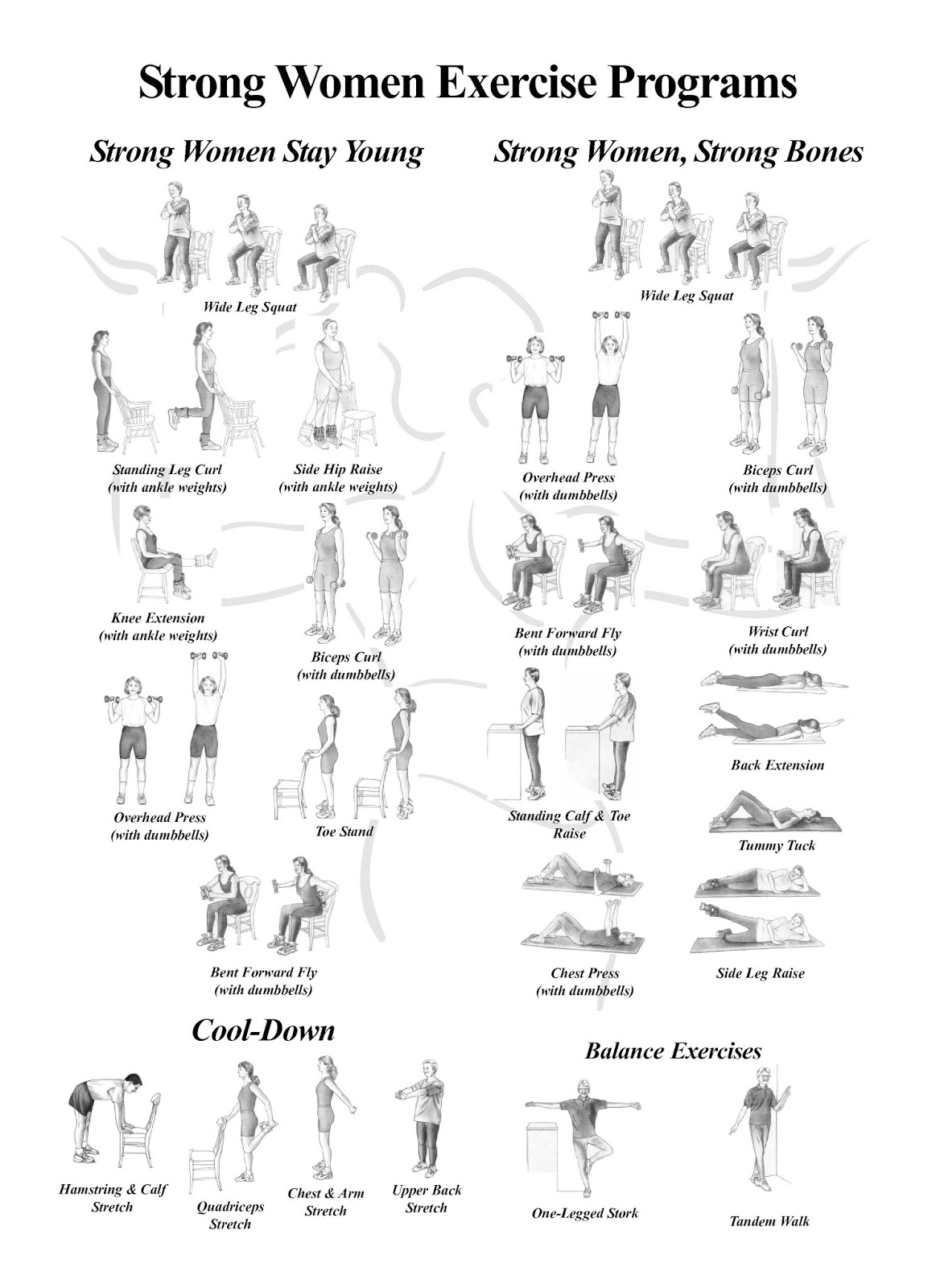
The MSU Extension Office in Teton County plans to offer the StrongPeople strength training class in Choteau starting November 1 on Tuesdays and Thursdays. Class will be from noon-1:00 p.m. and will continue through December 20.  This strength training class is a one-hour class, two days a week and will be held at Choteau City Hall.  Participants work through a series of weight-lifting and strength-training exercises.  Strength training improves:  muscle mass, strength, balance, bone density, arthritis symptoms, metabolic rate, glucose/lipid profiles and mental health.  The class is based on research from Dr. Miriam Nelson of Tufts University. The program, which uses free weights, is adaptable for a variety of fitness levels, and is available to both men and women.  The strength training class, taught by Jane Wolery, is for participants who are ages 16-100.  A minimum of 10 registered participants is required to offer the class.  


Please call the MSU Teton County Extension for registration packet and information about the StrongPeople class. The StrongPeople class does require a series of paperwork, including medical release forms.  The registration packets can be mailed or emailed to potential participants, as well as picked up at the Extension Office. The first 20 people with completed registration materials are guaranteed a spot in the class.  Others will be put on a waiting list. If there is ample interest, a second session may be added at 8:30 a.m.


Participants of previous classes have reported a variety of improvements, including relief from chronic pain, improved strength, increased sleep quality and an uplifted mental attitude.   

The StrongPeople participants will get an educational bonus with a variety of daily discussion topics from MSU Extension Family Consumer Science.  

Strong People


Teton County, MT, January 5, 2017– As the morning alarm went off and I got my exercise clothes on, I was thinking about the day, not just the one ahead, but the same date thirteen years ago.  It was cold, like it has been the first week of January this year. I grabbed my tennis shoes and went to wake up my youngest daughter so she could get ready for her morning sports practice.  Thirteen years ago we weren’t taking anyone to sports practice on January 5.  We were headed to Chester for a medical appointment.  As I recall, I got a workout that day, too!  It lasted a little longer than my jog on the elliptical did this morning, but by that evening we were able to call friends and family to let them know that a healthy baby girl had arrived to join our family.
Not all workouts have such an immediate and tangible result as childbirth, but my two daughters have provided some of the motivation I need to continue exercising regularly.  One of my favorite exercise programs is the Strong People strength training program I have been teaching through MSU Extension in Teton County since 2008.  We currently have a class running from noon-1:00 p.m. on Tuesdays and Thursdays at the Choteau City Hall.  The free class is open to the public and will run from January 5 to February 9.  If you are interested, please call our office at 466-2492 or stop by Choteau City Hall on Tuesday or Thursday at noon to see the class and pick up a registration packet.  
The strength training exercises we use are ones that Dr. Miriam Nelson of Tufts University has been researching for years.  She has found strength training to nearly provide people with a “reverse aging” opportunity.  The exercises are simple and uncomplicated, but they are not easy.  Each participant can progress at his or her own rate by starting with no weights and working up to 20-pound free weights on each of the exercises.  Additional repetitions can be added or they can be done more slowly to make the strength exercises more challenging.  Participants mention immediate benefits from the exercises, including increased stamina and energy.  Past participants have had goals to travel with the younger generation of family members on a trip and the need to be able to walk and hike.  Several participants have remarked how much easier flights of stairs are or how easy it is to get out of chairs.  One even mentioned it improved his golf game markedly.  
For me, a big part of my motivation to exercise is my family.  I want to have the energy and strength to be a full and active participant in their lives now, and for many years to come. Perhaps you have some of your own motivations and reasons why you want to exercise.   I think exercising regularly can be the formula for staying as young as possible.  Not that I mind getting old.  I think that should be the goal, but it should also be the goal to be healthy and fit while we age.  People have often looked for the fountain of youth, but I’m pretty sure the fountain of youth requires sweat pouring out daily!  For me, I plan to keep exercising to combat the effects of now having two teenage daughters!  Whatever your motivation or inspiration, I invite you to join us for the Strong People class.

Sunday, December 27, 2015

That Invitation Keeps Ringing

My head finally got to the pillow at one o’clock this morning, so when I shut my alarm off just a few hours later at 5:45 a.m., it was hard to remember that I set it as an “invitation” to my morning exercise routine.  The alarm is just one part of an invitation to exercise. I also have my shoes and exercise clothes set out, making them easy to grab in the morning.  I usually have a device ready with an audio book to listen to or an old TV series to stream while I start my day on the elliptical. 
There are several strategies to use when “inviting” yourself to exercise.  One of the classes I taught, 4-Health (which was for parents of teens and preteens who were trying to establish healthy households) suggested doing an “activity inventory” of the home.  The inventory or checklist asked families to go room by room in their homes to see if equipment that would encourage activity was available and easily accessible.  Having supplies and equipment ready to use makes a considerable difference in the items getting used.  Families were encouraged to make sure that balls, jump ropes, bikes, skates, sleds, etc. were easy to find and use.  That list of “exercise equipment” makes me think that exercise sounds a whole lot like play. Sometimes it is easier to answer an invitation to play than to exercise. 

Families in the 4-Health class were encouraged to take breaks from sedentary periods for active play. For instance, if watching TV, get up and do a jump rope challenge during the commercials.  For commercial-free sedentary activities, a timer can be used as a reminder or invitation to get up and move.  Families were able to set up simple and fun activity challenges, such as obstacle and relay courses.  One group had a bucket at the bottom of their stairs that they threw ping-pong balls into and when they missed, they ran down the stairs and back up for another try.  Another group designed a foam ball and somersault activity in their hallway.  Sometimes all it takes to be active is a little creativity and an invitation.

Of course, like play, exercise is often more fun with more than one person.  Another common way to incorporate motion into your day is to make it social.  Invite a friend to join you.  You are less likely to talk yourself out of exercising, if you know someone has arranged their schedule to join you. 

Take a look around your home to see if you can find any “invitations” to be active.  If not, it is time to start delivering some invitations.  Put a basket of hand or ankle weights by your favorite chair, set out your exercise clothes and set your alarm, even if it is for a mid-afternoon stroll.  I think I’ll start working on inviting myself to put my head on my pillow a little earlier, because a good night’s sleep makes it much easier to accept the invitation to get out of bed and exercise.


An Invitation from the Stairs

I was sitting at a table with colleagues at a conference, when one of them asked me what I was enjoying most about the conference center. I didn’t even hesitate and answered, “The stairs.”  I went on to explain that I loved the large, beautiful, open staircases at the conference hotel, which had been built around 1910 and was refurbished in the late 1940's.  I said I loved the way the wide staircases were such an invitation to use the stairs.  We then discussed how none of us had even really looked for the elevators, since the staircases were such a prominent architectural feature.  Now, I have nothing against elevators, and since many of my family members have used wheelchairs, I think they are a necessary part of any public building that has more than one floor.  However, it is unfortunate that somehow, when elevators were added, stairs were hidden – no longer the open invitation they had once been. 

With the invitation these stairs offer, there is no need to look for an elevator. 
There are many invitations in life that we don’t even notice, but that create daily habits.  My colleagues agreed that they had taken way more flights of stairs than normal, simply because of the structure of the building.  A week after I returned from the conference, I was in Bozeman on the MSU campus for a few days.  While I was there, I stopped into Joel Schumacher’s office.  He is an associate specialist in Extension Economics. I told him how much I liked the way that the parking situation on campus invited me to walk everywhere.  Of course, working on campus and dealing with the parking situation daily, he thought I was crazy.  Each day I was on campus I walked from buildings on the south end to buildings on the north end of campus.  It would have been ridiculous to drive, as it would have taken more time circling to find a parking space than it would have taken to walk.  I don’t know for sure, but I suspect I could walk most of main street in Choteau in about the same time and distance as I got across campus, and yet, parking is easy here, crosswalks are not as well marked as on campus, and there aren’t bunches of other people walking; and somehow, I just do not make it a habit to walk to do my errands. 

The stairs in this hotel are so grand and indeed, this flight takes you a half-level to the grand piano and then onto the main lobby.  
4-H BioScience on MSU campus.
This has been an unusual year, as I’ve been on campus nearly once a month since last spring. I’ve been paying attention to how the built environment either invites or discourages us from daily healthy choices.  Joel and I were visiting about how the buildings on campus, built in different eras, reflect not only structural choices, but health choices.  For instance, when I stay in the Hedges dorms (built in 1965), the elevators and stairs are in the same general location, but the stairs are in stair wells.  I think there is a reason they are called wells.  They feel cold, dark and cavernous -- not exactly an invitation.  Joel mentioned that in one of the new buildings on campus (I’ve not been in yet) there is a prominent, open staircase as part of the design. Maybe we have remembered something at the turn of this century that we knew a century ago.   I worked in the courthouse in Sheridan, Wyoming, which was built in 1905. It had a gorgeous oak staircase that summoned me to use it often during the years I was there.


I invite you to start looking for and taking the stairs.   Start walking to do your errands -- just seeing you walking may be enough to encourage others. Start paying attention to your environment and listen to the ways it invites you into your habits.  If you find that the invitation isn’t in favor of your health, refuse the invitation and create a new habit.  Structure your life, so that you are invited to make healthy choices.

Tuesday, May 13, 2014

The Next 100 years?

A few years ago, I was able to attend an incredible presentation by Steve Stark, a former Extension communication specialist from North Dakota.  As he shared about history, his lesson came alive in front of the audience.  The skilled lecturer and historian was also an artist. He covered one entire wall of a conference room with paper and while he lectured, he drew scenes and people with chalk. One person described it as having a giant story book created in front of you. His topic that day was the history of the Extension Service in the United States.
Stark giving presentation.  Photo by Kimberly Gressley, University of Arizona Extension. 

I’ve been an Extension Agent since 1996 and an Extension client since the 1970s.   In that time, I’ve heard many people throw around topics like the Morrill Act, the Hatch Act or the Smith-Lever Act.  Generally, these lessons were dry and boring and contained much information I should have cared about, but the delivery, and my learning were both lacking.  In contrast, Stark’s presentation was remarkable and he gave context as to other issues facing the nation and the connections of people with ideas while these Acts of Congress were being decided. 

In 2014, we are celebrating the centennial anniversary of the Smith-Lever Act of 1914 which provided for the creation of Extension.  Thursday, May 8, officially marked 100 years since the signing of the Act.  The creation of Extension outreach education programs could not have been possible without the Morrill Act, which was signed into law in 1862.  Think of those years leading up to 1862.  During a time of tremendous struggle in the United States, key people had a long-term vision for prosperity and furthering access to education to provide equality in opportunities.  The nation was faced with an impending Civil War, yet key players recognized that to propel the nation forward we had to invest in education.  The Morrill Act established land-grant universities that would focus work in agriculture and engineering.  The leadership realized that agriculture and engineering would be fundamental in driving our nation forward.  The United States Department of Agriculture was also begun in 1862 and Lincoln called it the “people’s department.” 

Later, as land-grant universities were teaching agriculture practices, it became apparent that there was a lack of current research in agricultural knowledge across the different climate and growing conditions of the United States.  Again, Congressional leadership tackled the problem in a visionary fashion and in 1887, the Hatch Act provided for the establishment of agriculture experiment and research stations. 

Once land-grant universities were going strong and agriculture experiment stations were providing important research, leadership looked around again for a way to improve lives of citizens.  They realized that not everyone who lived in rural agricultural communities would attend a land-grant institution and thus the leadership decided to bring the information and education to the people. 

In 1914, the Smith-Lever Act provided for the establishment of the Extension Service.  Specifically, the Act stated, “Cooperative agricultural extension work shall consist of the development of practical applications of research knowledge or giving of instruction and practical demonstrations of existing or improved practices or technologies in agriculture, uses of solar energy with respect to agriculture, home economics, and rural energy, and subjects relating thereto to persons not attending or resident in said colleges in the several communities and imparting information on said subjects through demonstrations, publications and otherwise and for the necessary printing and distribution of information in connection with the foregoing; and this work shall be carried on in such manner as may be mutually agreed upon by the Secretary of Agriculture and the State agriculture college or colleges …”

The words of the Smith-Lever Act likely have not mattered to you nearly as much as the result of it.  A country that can feed itself and educate citizens is a nation that can further other accomplishments.  As the visionaries of this country know, we are all connected.  I am proud to be part of the great tradition of Extension.  Montana State University is your university and an educator from the land-grant university is assigned to your county to assist you, whether directly or indirectly, bringing campus to you. 

Our Extension classes in Teton County strive to provide a public value -- from the 4-H youth development program that trains our community and state leadership of tomorrow, to wellness classes that prevent diseases, keeping people healthier, active and vibrantly contributing to their communities longer thereby reducing public health care expenses.  Extension work encompasses agricultural management practices and community development. 

The original Smith-Lever charter statement remains true after 100 years, that the purpose of Extension is "better farming, better living, more happiness, more education, and better citizenship" for the "entire country."


For 100 years, MSU Extension has been educating in local communities. We should celebrate the past 100 years, but more importantly, we should be visionaries in planning for the next 100.  I encourage you to post a comment below to share your vision for your Extension program for the next century.  

Other Resources:

Steve Stark
More on Steve Stark
Morrill Act
Hatch Act
Smith-Lever Act